

Odds are, if you’re reading this, you’re among the growing majority of OT network operators who have made the jump from traditional fieldbuses and have implemented Ethernet in your operations.
 You are here:
News
Compact Industrial Gateway for High-Speed Data Transfer
Getting Started: Cross-Site Remote Management for ADAM Modbus I/O with EdgeHub
Advantech and Qualcomm Strengthen Collaboration to Accelerate Innovations with AI On Premises
You are here:
News
Compact Industrial Gateway for High-Speed Data Transfer
Getting Started: Cross-Site Remote Management for ADAM Modbus I/O with EdgeHub
Advantech and Qualcomm Strengthen Collaboration to Accelerate Innovations with AI On Premises
Odds are, if you’re reading this, you’re among the growing majority of OT network operators who have made the jump from traditional fieldbuses and have implemented Ethernet in your operations.

For decades, the office environment had been on an Ethernet network, the factory floor had operated independently on fieldbus, and each were happily separate in their operations and needed little contact with one another. Now, with the proliferation of Ethernet on the industrial side and the organization converging into a single data network spanning both information technology (IT) and operational technology (OT), the conflict seems inevitable—which department gets oversight and control of the Ethernet network?
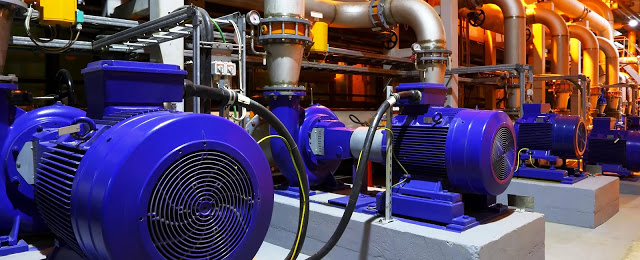
The population of variable frequency drives in modern industrial facilities has escalated significantly in recent years. And no wonder—by adjusting motor speed and voltage to meet changing real-time process demands on the fly, VFDs help deliver valuable benefits such as increased energy efficiency, more precise process control and reduced wear and tear on costly equipment. Unfortunately, benefiting from a VFD isn’t always quite as easy as simply plugging one in.

In recent years, many industrial backbone network users have found themselves in a no-win situation. The familiar circuit-switched SONET and SDH networks they’ve relied upon for decades are falling rapidly behind in meeting their growing needs for video, data and other high bandwidth-demanding applications. Yet, the most common practical packet-switched alternative—for many, IP/MPLS—is a protocol clearly intended for more complex carrier networks. It’s proving to be too costly, complicated and feature-poor for the specific needs of utilities, transportation, pipeline and other industrial users operating their own internal network backbone.

What is EIA 485?
It is important to remember that EIA-485 is not an application or protocol but a balanced transmission interconnect standard that specifies the electrical characteristics of drivers, receivers and transceivers.
Languages
Blog categories
Newsletter